Permanently reduce energy losses.

Technical insulation materials made from flexible elastomer (FEF) and polyethylene (PEF) foams are among the few industrial products that save more energy during their service life than is required for their manufacture. They prove this both in the insulation of heating and sanitary systems and in the insulation of air conditioning and refrigeration technology. “In this way, they help to implement the EU’s decision to reduce energy consumption in buildings.

Optimising building technology for energy efficiency.

Europe has set the course for the Green Deal. The agenda includes ambitious climate targets, to which the construction industry is also contributing. In general, it is one of the most resource- and energy-intensive industries: around 40% of total energy consumption is currently accounted for by the building sector. For this reason, EU countries have tightened their requirements for the primary energy consumption of buildings on a country-specific basis. This takes into account the thermal insulation of the building envelope as well as the energy efficiency of the heating, ventilation and cooling systems. Synthetic insulation materials made of flexible elastomer (FEF) and polyethylene foams (PEF) can be used to optimise technical systems in this regard. They ensure that the energy consumption of the system is reduced and maintained in the long term.

Studies confirm positive ecological balance.

Industrially manufactured products require raw materials and energy for their production. The question of the extent to which they impact the environment is becoming increasingly important for both manufacturers and consumers in the wake of climate change. Technical insulation materials are a special case here, as they save energy over their service life. Even if other products consume less energy and cause less CO2 emissions during their manufacture, FEF and PEF materials can have a better overall ecological balance.

Studies by member companies confirm this. Various CEFEP members carried out analyses of their products over their entire life cycle (Life Cycle Assessment) in accordance with EN 15804. The results show that FEF insulation materials also have a positive impact on the energy balance of buildings thanks to their superior technical properties.

Energy efficiency of technical insulation materials.

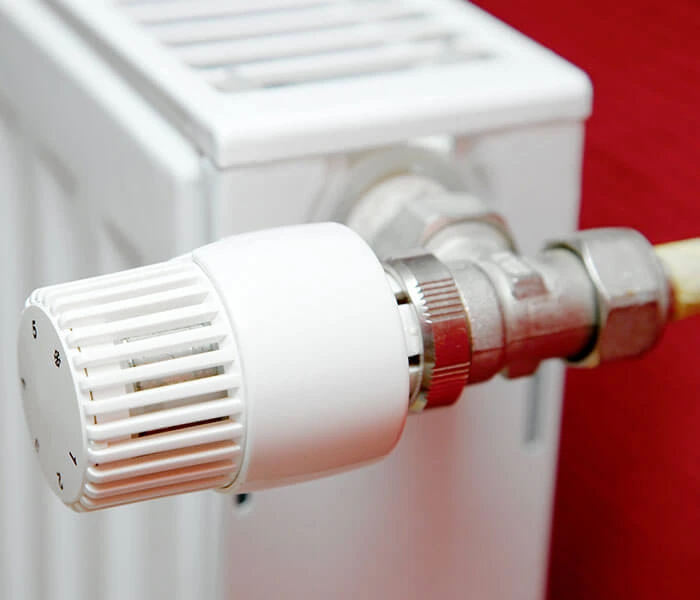
Heating and Plumbing

Studies clearly show that thermal insulation of pipes makes a major contribution to the energy efficiency of buildings. Heating systems in particular offer high potential for savings. According to these studies, the energy required to supply hot water and heating in an average residential building in Europe can be reduced by up to 25% with optimal pipe insulation. Technical insulation materials made of flexible elastomer and polyethylene foams are recommended due to their long-lasting effect. Thanks to their closed-cell structure in combination with low thermal conductivity, synthetic insulation materials help to reduce energy consumption in buildings. In many cases, the insulation of pipes, fittings and pipe clamps pays for itself after just a few weeks.

Increasing demand for air conditioning.

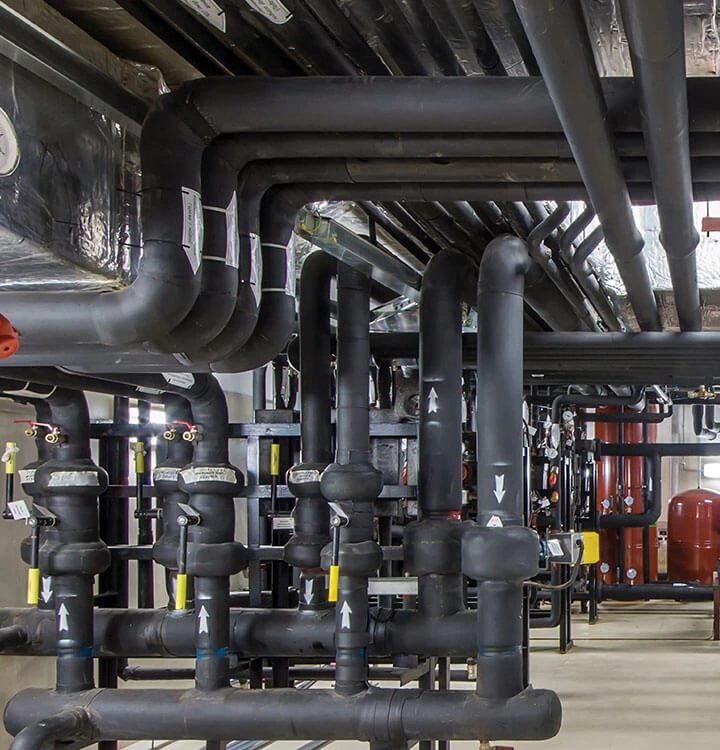
The success of insulation depends on the correct measurement of insulation thickness – especially in air conditioning technology. The temperature on the material surface must always be above the dew point in order to effectively prevent condensation. Although this is the main insulation function, there are also energy benefits for this area of application. Due to the low temperature difference, fewer savings can generally be expected here than with heating systems. However, generating lower temperatures requires more energy than heating water. Therefore, investing in technical insulation materials quickly pays for itself. Protection against energy loss and condensation go hand in hand. The demand for air conditioning technology continues to rise worldwide – according to forecasts, it will even triple by 2030.

Air Conditioning